2024 LTER Year in Review: Generating Momentum
In 2024, we invested in people, in science, and in our ability to impact others. We hope we will carry this momentum into the next decade.
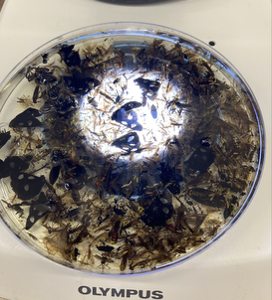
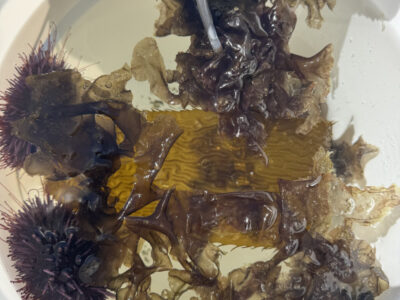
As part of a multi-site Research Experience for Teachers (RET) program, two science teachers, Emily Chittick and Traci Kennedy, from Milwaukee Public Schools, conducted an experiment to see whether warmer water temperatures affected the ability of sea urchins to flip themselves over after being turned upside down. They wrote up this part of their summer… Read more »
Data Nuggets, operated by the KBS LTER, started its third round of funding from the National Science Foundation to improve data literacy in K-16 students.
Welcome to the Woods aims to at introduce political refugees to the natural features of their new home at the Hubbard Brook LTER.
NGA’s Virtual Field Trip brings the Arctic to the classroom, pairing a video, video game, and activities to immerse students near and far in the ecosystem.
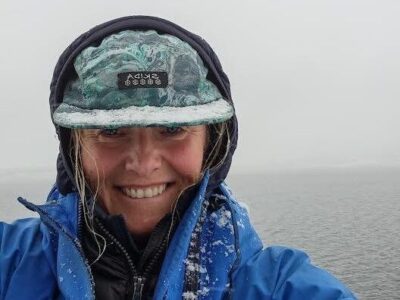
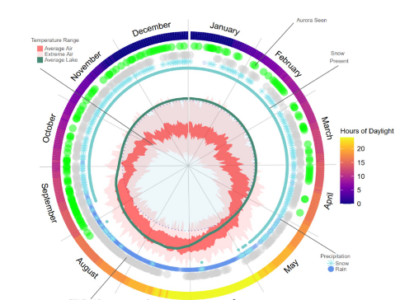
The Arctic tundra ecosystem has naturally low biodiversity and is experiencing changes due to the influences of climate change. Over the past 30+ years, researchers at the Arctic LTER site have developed a suite of experiments to study the effects of expected climate changes on the ecosystem as well as conducting continued monitoring of ecosystem… Read more »
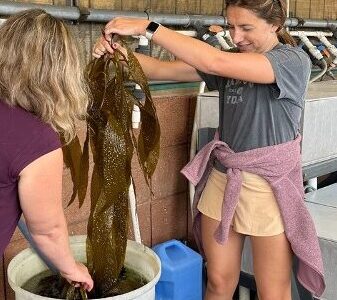
RET projects at the Santa Barbara Coastal LTER site will focus on marine heatwaves, a research focus that connects to the impact of climate change on important ecosystems. Marine heatwaves (MHWs) – defined as prolonged periods of unusually high seawater temperatures – have emerged as disruptive forces in the kelp forest, threatening marine biodiversity and… Read more »
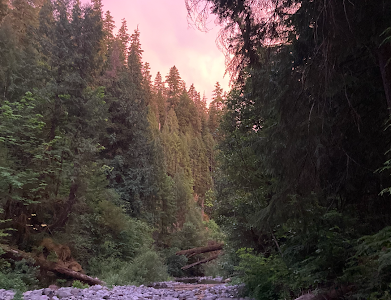
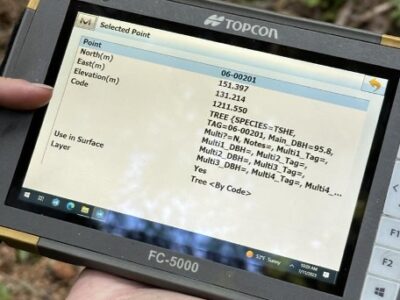
Pacific Northwest forests contain some of the largest reserves of forests on the planet, but many questions remain unanswered about how drought and heat stress from climate change will change forest dynamics and biodiversity. RETs on this project will track understory plant populations and quantify interactions among the many important and diverse plant species in these understory ecosystems.
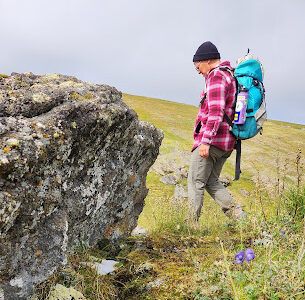
Many species that rely upon mountain streams may experience stress from reduced summer habitat, increased water temperature, and increased vulnerability to predators. Which species respond and how they respond to climate change and stream drying is an important question. RETs conducting research on biodiversity and riverscapes will work alongside Dr. Ivan Arismendi from Oregon State… Read more »
We are excited to share with the broader R community a new collection of 8 data samples geared towards teaching environmental data science!